

Latest
Speech
20 June 2026
UN Secretary-General Message on World Refugee Day 2026
Learn more
Story
17 June 2026
FAO Calls for Stronger Action on Rangeland Restoration and Drought Resilience at World Desertification and Drought Day
Learn more
Speech
17 June 2026
The Secretary-General Message for World Day to Combat Desertification and Drought 2026
Learn more
Latest
Publication
01 February 2023
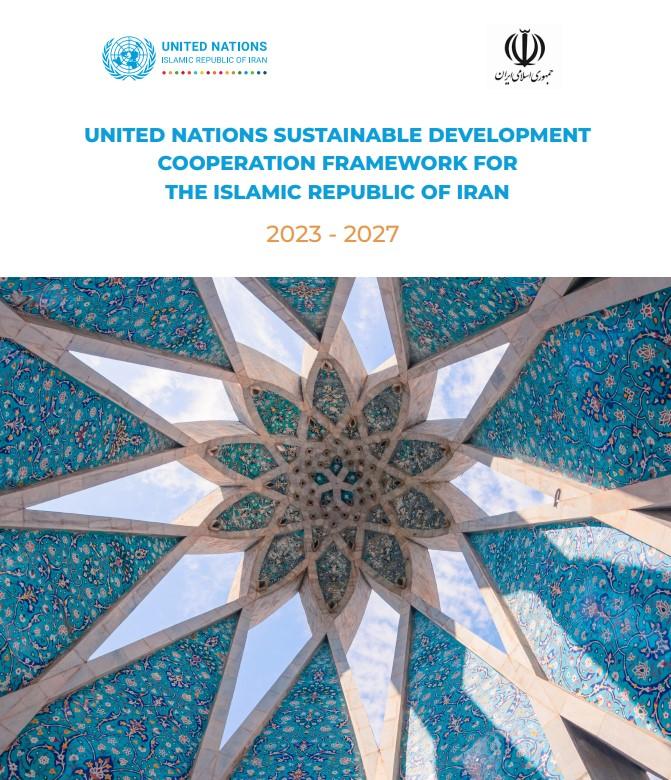
United Nations Sustainable Development Cooperation Framework (UNSDCF) for I.R.Iran 2023 - 2027
The United Nations Sustainable Development Cooperation Framework (UNSDCF) for 2023-2027 was developed jointly between the Government of the Islamic Republic of Iran and the United Nations System to reflect and support the national development goals and strategies. Starting in 2021, the United Nations Country Team in Iran engaged in consultations internally and with a wide range of national partners that identified the evidence base to prioritize development needs and opportunities for the UNSDCF. These consultations resulted in the vision for United Nations support to Iran’s development that is based on equitable, inclusive, resilient, and sustainable growth and development. Five strategic priorities that guide the work of the United Nations System in Iran in the coming years were identified: (a) socio-economic resilience; (b) public health; (c) environment; (d) disaster risk reduction and management; and (e) impacts of drug use and drug trafficking.
1 of 4
Publication
27 October 2025
United Nations Iran Country Results Report - 2024
Amid the global, regional and domestic challenges in 2024, the United Nations remained committed to supporting the people of Iran. The two largest areas of the United Nations programme interventions were health and support to refugees and host communities. The United Nations also provided impactful programme interventions in socioeconomic resilience, environment, disaster risk reduction and drug control.
1 of 4

Publication
30 October 2024
United Nations Iran Country Results Report - 2023
Throughout 2023, the UN family in Iran supported the Government of the Islamic Republic of Iran in delivering on its development plans and in the success of critical initiatives.
1 of 4

Publication
15 August 2024
United Nations Iran Country Results Report - 2022
This report lays out the UN’s collective contribution to Iran’s development and humanitarian goals, including under the United Nations Development Assistance Framework (2017-2022).
1 of 4

Story
17 June 2026
FAO Calls for Stronger Action on Rangeland Restoration and Drought Resilience at World Desertification and Drought Day
Tehran, 17 June 2026 – FAO Representative in the Islamic Republic of Iran, Farrukh Toirov, highlighted the global importance of rangelands emphasizing on scaling up restoration efforts, strengthening drought resilience, and promoting sustainable agrifood systems.The Food and Agriculture Organization of the United Nations (FAO) reaffirmed its commitment to combating land degradation, desertification and drought during a high-level ceremony marking World Desertification and Drought Day 2026, held at Imam Khomeini International Airport Conference Hall and organized by the Natural Resources and Watershed Management Organization (NRWO).Toirov, highlighted this year’s theme, “Rangelands: Recognize. Respect. Restore” and emphasized that rangelands are vital ecosystems supporting biodiversity, food and water security, climate resilience, and the livelihoods of millions of pastoralists and rural communities. However, these ecosystems are increasingly under pressure from drought, climate change, land degradation, and unsustainable land use practices.“Healthy rangelands are not only an environmental asset but a cornerstone of food security and sustainable rural development,” Toirov stated, noting that the country’s extensive dryland ecosystems play a strategic role in supporting livestock production, watershed functions, and rural livelihoods.He further stressed that addressing land degradation requires integrated solutions, including sustainable land and water management, ecosystem restoration, climate-smart agriculture, and active community participation.Highlighting FAO’s global role, Toirov noted that FAO works under the UN Convention to Combat Desertification and global restoration initiatives to reverse land degradation, which affects nearly two billion hectares worldwide.So far, FAO has worked closely with the Ministry of Agriculture Jahad, NRWO, research institutions, and development partners to support sustainable natural resource management and strengthen resilience. Key initiatives include the GEF-supported Integrated Natural Resources Management for Sustainable Livelihoods (RFLDL) project, which has promoted community-based land management, watershed rehabilitation, biodiversity conservation, and livelihood improvement.FAO has also supported major programmes in the Lake Urmia Basin, funded by Japan, focusing on sustainable water management, drought resilience, and climate-smart agriculture, alongside UNDP. In addition, FAO’s work on sand and dust storms has strengthened national capacities through risk assessments, preparedness tools, and investment planning frameworks.Toirov concluded by emphasizing that land degradation is not only an environmental issue but one that affects food security, health, migration, and economic development. He reaffirmed FAO’s continued support to the Islamic Republic of Iran in scaling up restoration efforts, strengthening drought resilience, and promoting sustainable agrifood systems.
1 of 5

Story
15 June 2026
Community-led Livestock Conservation in Northwest Iran
Tehran, Iran – 15 June 2026 – The Food and Agriculture Organization of the United Nations (FAO), in collaboration with the Ministry of Agriculture Jahad and national partners, has launched a new project aimed at empowering local communities to conserve and sustainably develop endangered indigenous livestock breeds in northwestern part of the Islamic Republic of Iran.The inception workshop for the project, titled “Empowering Local Communities to Conserve and Develop Endangered Indigenous Livestock Gene Pool in the Northwest of Iran,” brought together government officials, technical experts, researchers, breeders, and local stakeholders to discuss strategies for safeguarding valuable animal genetic resources while strengthening rural livelihoods.Opening the workshop, FAO Representative in the Islamic Republic of Iran, Farrukh Toirov, emphasized the critical role of indigenous livestock breeds in building resilient agrifood systems and addressing global challenges such as climate change, biodiversity loss, and food insecurity.“Conserving these genetic resources is not only essential for protecting biodiversity but also for ensuring sustainable food production and resilient rural livelihoods in the future,” Toirov said.Northwest Iran (the Islamic Republic of) is home to several valuable indigenous livestock breeds, including the Bactrian camel, Sarabi cattle, Mahabadi goat, and Markhoz goat. These breeds represent an important component of the country’s agricultural biodiversity and provide livelihoods, cultural identity, and resilience for rural and pastoral communities.“According to FAO’s latest assessments, more than 8,800 local and transboundary livestock breeds have been reported worldwide, more than 70 percent of them are classified as being at risk of extinction, highlighting the urgent need for conservation efforts and stronger support for livestock keepers who safeguard these resources.”Highlighting that sustainable conservation cannot succeed without the active involvement of local communities, the project places community empowerment at the center of its approach. Over the next 18 months, it will support the establishment of community-based breeding programmes, pedigree registration and performance recording systems, conservation of genetic materials.”The initiative will also invest in the rehabilitation of grazing areas, strengthen milk and mohair processing facilities, and provide extensive training and capacity-development opportunities for livestock keepers, technical experts, and policymakers. In parallel, efforts will be made to enhance value chains and create new market opportunities for products derived from indigenous livestock breeds, helping improve incomes and economic resilience in rural areas.The project aligns with international efforts to promote sustainable and inclusive agrifood systems. It contributes to the objectives of the International Year of Rangelands and Pastoralists 2026, which recognizes the vital role of pastoral communities in biodiversity conservation, food security, and ecosystem stewardship.A key feature of the initiative is its strong focus on rural women’s economic empowerment. Women play an essential role in livestock production systems across the target areas. Through support for processing facilities, value-chain development, and targeted capacity-building activities, the project aims to strengthen the economic participation and leadership of rural women while supporting the conservation and sustainable use of indigenous livestock breeds.Building on FAO’s previous conservation initiatives in the country, including successful projects supporting Bactrian camel conservation and innovative mobile veterinary and reproductive services for nomadic herders, the new programme expands conservation efforts to multiple indigenous breeds and reinforces the link between biodiversity conservation and rural development.
1 of 5

Story
02 June 2026
A message from Ms. Christine Weigand, the United Nations Resident Coordinator in Iran
Salam,
My name is Christine Weigand, and I have been recently appointed as United Nations Resident Coordinator in Iran.
Yesterday, I had the honour of presenting my credentials and thereby formally beginning my tenure as the representative of the United Nations Secretary-General in the Islamic Republic of Iran.
I would like to share my greetings with you – a moment that I have been waiting for ever since arriving just a few weeks before the start of the conflict in February.
Throughout the difficult days and weeks that followed, my colleagues in the UN team here in Iran and I were here in the country, continuing our work and supporting impacted civilians and communities.
I know that last year, and of course this year, have been a particularly challenging period, and I would like reaffirm our solidarity with the people of Iran.
For me very personally, coming back to work in Iran holds special meaning.
Between 2015 and 2019, I had the privilege of living and working here in a different capacity within the UN.
Together with my family, we came to know this beautiful country, its rich culture and its people, and it truly warms my heart to be back.
In the months and years ahead, I look forward to meeting many of you, to listening and to learning, as we work together towards creating a more peaceful, a more prosperous and also a more sustainable future for all.
Merci!
My name is Christine Weigand, and I have been recently appointed as United Nations Resident Coordinator in Iran.
Yesterday, I had the honour of presenting my credentials and thereby formally beginning my tenure as the representative of the United Nations Secretary-General in the Islamic Republic of Iran.
I would like to share my greetings with you – a moment that I have been waiting for ever since arriving just a few weeks before the start of the conflict in February.
Throughout the difficult days and weeks that followed, my colleagues in the UN team here in Iran and I were here in the country, continuing our work and supporting impacted civilians and communities.
I know that last year, and of course this year, have been a particularly challenging period, and I would like reaffirm our solidarity with the people of Iran.
For me very personally, coming back to work in Iran holds special meaning.
Between 2015 and 2019, I had the privilege of living and working here in a different capacity within the UN.
Together with my family, we came to know this beautiful country, its rich culture and its people, and it truly warms my heart to be back.
In the months and years ahead, I look forward to meeting many of you, to listening and to learning, as we work together towards creating a more peaceful, a more prosperous and also a more sustainable future for all.
Merci!
1 of 5

Story
23 May 2026
Local community participation is key to preserving biodiversity, FAO representative emphasizes
“Local community participation and synergy between domestic and international experts is key to prevent irreversible environmental destruction and protect this treasure for future generations,” the Representative of the Food and Agriculture Organization of the United Nations (FAO) in Iran, Farrukh Toirov said in national event marking the International Day for Biological Diversity 2026.Organized by the Department of Environment, the event took place on Saturday, 23 May in Sari, Mazandaran Province. It brought together senior government officials and United Nations representatives, including Shina Ansari, Head of the Department of Environment; FAO Representative in Iran; and Ayshanie Medagangoda-Labé, United Nations Development Programme (UNDP) Representative in Iran.This year's event was held under the global theme “Acting locally for global impact” – a message that FAO Representative placed at the center of his address.Biodiversity: not an environmental issue aloneSpeaking at the opening ceremony, Toirov stressed that biodiversity must not be treated as a standalone environmental concern. “Biodiversity is the living foundation of agrifood systems, food security, livelihoods, ecosystem resilience, and sustainable development,” he stated.He highlighted alarming global trends: of more than 6 000 plant species cultivated for food throughout history, fewer than 200 contribute substantially to global food production today – and just nine crop species account for 66% of total global crop production. Toirov also noted that 75% of the world’s most productive crop plants depend at least in part on pollinators, which contribute to roughly 35% of global crop production. “Without biodiversity and ecosystem services, food production itself would be at risk,” he warned.Toirov recognized Iran as a country of significant global biodiversity importance, noting its remarkable climatic, topographic, and ecosystem diversity – home to more than 8 200 plant species, around 197 mammal species, 535 bird species, and globally important and endangered species such as the Asiatic cheetah and the Persian leopard.He underscored, however, that these valuable assets face increasing pressures from climate change, water scarcity, land degradation, and habitat loss – making strengthened conservation and sustainable management efforts all the more urgent.FAO’s partnership with Iran: local action, global impactThe FAO representative highlighted the breadth of FAO-supported interventions in the Islamic Republic of Iran that contribute – directly or indirectly – to biodiversity conservation and ecosystem resilience. These include the conservation of endangered indigenous livestock genetic resources in north-western Iran, such as the Sarabi cattle, the Marakhoz goat, and the Bactrian camel; long-standing engagement in the Lake Urmia Basin to reduce environmental pressures through improved water efficiency; and integrated pest management, sustainable agriculture, and climate resilience initiatives supported through the Green Climate Fund.“Biodiversity conservation in Iran is inseparable from sustainable agriculture, water security, climate resilience, ecosystem restoration, dryland management, and rural livelihoods,” Toirov affirmed.Closing his remarks, Toirov reaffirmed FAO’s commitment to its strong partnership with the Government of the Islamic Republic of Iran, emphasizing that while FAO and the United Nations system play a key facilitating role – bringing global knowledge, technical expertise, and innovation – the primary leadership rightly rests with national institutions.“Biodiversity action begins locally: in farmers’ fields, in rangelands, in watersheds, in wetlands, in forests, and within communities. But when local action is sustained and coordinated, its impact becomes national – and global,” he concluded.
1 of 5

Story
11 April 2026
Statement by Principals of the Inter-Agency Standing Committee - End impunity for violations of rules of war
In just the last month across the Middle East, thousands of civilians have been killed and injured. Hundreds of thousands have been displaced, many multiple times. The numbers continue to rise and essential services are increasingly difficult to access. Health workers, hospitals and ambulances have been targeted. Schools have been struck. Civilian infrastructure – including bridges, residential buildings, houses, water facilities and power plants – has been destroyed. This leaves us especially concerned about women and children and others with specific needs. Global supply chains are also impacted, with food and fuel prices on the rise.Our humanitarian colleagues have been caught up in the hostilities. This year alone, 14 aid workers have been killed or injured in the Occupied Palestinian Territory, eight in Iran and five in Lebanon. This is an alarming toll, not least for national staff and local organizations, working courageously on the humanitarian front lines every day.We strongly condemn all attacks on civilians, including humanitarian and health workers, as well as civilian objects. We demand that all parties – whether Member States of the United Nations or armed groups – respect their legal obligation to protect civilians, including humanitarian personnel, and civilian infrastructure. All violations must be met with accountability. Even wars have rules, and these rules must be respected.
1 of 5

Press Release
12 May 2026
WHO Launches $2 Million Emergency Intervention to Prevent Disease Outbreaks and Sustain Essential Health Services in Islamic Republic of Iran
Since 28 February 2026, aerial bombardments have critically undermined Iran’s capacity to deliver life-saving health services. The toll on civilian health infrastructure has been devastating, with an estimated 229 healthcare centers, 49 hospitals, 78 pharmaceutical facilities, laboratories, warehouses damaged, 56 emergency bases struck, nine hospitals evacuated, and 47 ambulances and 10 support vehicles destroyed. Furthermore, attacks on or near pharmaceutical and diagnostic production facilities have severely disrupted domestic medical supply chains, interrupting the delivery of critical care to those who need it most.Simultaneously, southern Iran faces an elevated public health emergency driven by climatic shocks. Irregular and intermittently above-average rainfall following prolonged dry periods during the 2025–2026 season has triggered localized flooding and standing water. High-risk provinces, including Sistan and Baluchistan, Hormozgan, Kerman, and Khuzestan, are experiencing increased exposure to contaminated water sources. Combined with conflict-related disruptions to water, sanitation, and disease surveillance infrastructure, there is a significantly heightened risk of vector-borne and waterborne diseases, particularly cholera and acute watery diarrhea."The combined weight of ongoing conflict and severe climatic shocks has placed an unprecedented strain on Iran's health infrastructure, leaving vulnerable communities at severe risk," said Dr Jean Jabbour, WHO Representative and Head of Mission to the Islamic Republic of Iran. " This timely and critical emergency response is instrumental in preventing further health system collapse. It allows us to act immediately to safeguard essential supply chains and ensure that life-saving care remains accessible to the populations most acutely affected by this crisis."Without urgent action, localized transmission could rapidly escalate into widespread outbreaks, causing preventable morbidity and mortality. To catalyze an immediate response, WHO is deploying a focused package of high-impact interventions. This strategy prioritizes strengthening early warning surveillance systems and pre-positioning priority outbreak response commodities, including rapid diagnostic tests for malaria, dengue, and cholera. The intervention also encompasses the distribution of insecticidal nets, spraying equipment, and larvicides, alongside rapid technical assistance to reinforce integrated vector management in high-risk districts. Furthermore, WHO is restoring vital testing capacity by replacing destroyed real-time polymerase chain reaction devices and ensuring uninterrupted access to essential medicines, including immediate malaria treatment."With standing water from recent floods and severe damage to local health facilities, the risk of disease outbreaks is dangerously high," stated Dr Mikiko Senga, the WHO Health Emergency Programme Lead at the WHO Country Office in Iran. "By rapidly deploying these diagnostic tools, vector control materials, and essential treatments, we are augmenting our early warning capacities to intercept these threats before they escalate into wider public health emergencies."Over the next six months, this intervention will directly benefit an estimated 112,500 people through augmented epidemic control and restored medical access. At least an additional 272,550 people will be protected indirectly through strengthened response capacities and reduced outbreak risks. Ultimately, this comprehensive effort is designed to avert avoidable outbreaks and sustain the vital flow of essential health services when they are needed most.
1 of 5
Press Release
20 March 2026
Statement by the UN in Iran on the occasion of Nowruz
The UN condemns the military escalation which is causing immense suffering and harm to civilians and civilian infrastructure – including to health facilities, schools, homes and sites of unique cultural heritage within Iran. The UN is saddened by the loss of life and offer our condolences to families and loved ones.We reiterate the Secretary-General’s call for the protection of civilians, the immediate cessation of hostilities, and full adherence to international law. Civilians and civilian infrastructure must be protected at all times.In the year ahead, the UN in Iran will continue its work in support of the people of Iran and the refugee communities it hosts. We hope that this Nowruz may be a turning point to bring peace to the people of Iran and the region.***********************For further information please contact United Nations Information Centre (UNIC) in Tehran:Unic-tehran@un.org
1 of 5
Press Release
06 January 2026
Iran, China, UNAIDS celebrate success of pathfinder HIV project, declare readiness to deepen cooperation.
Iran-Tehran, 06 January 2026 – The Islamic Republic of Iran, the People’s Republic of China, and the Joint United Nations Programme on HIV/AIDS (UNAIDS) recently celebrated the successful completion of a pathfinder HIV project, designed to bridge the HIV testing gap in Iran’s national HIV response and generate alternative solutions to ensure a resilient national HIV testing programme in the years to come.This people-centred project combined supply chain, capacity development and knowledge exchange solutions to fill a gap in the testing pillar of Iran’s national HIV response. The project’s USD 655,000 budget was donated by the China International Center for Economic and Technical Exchanges (CICETE), and it was implemented by UNAIDS in close collaboration with the Centre for Communicable Diseases Control (CCDC) of the Ministry of Health and Medical Education, Iran, the United Nation Development Programme (UNDP), with technical support from the China National Center for AIDS/STD Control and Prevention (NCAIDS).The project delivered 570 thousand rapid HIV diagnostic tests to the Ministry of Health, provided capacity development on their utilization, and facilitated knowledge and experience sharing between China and Iran with a view to expanding domestic HIV diagnosis capacity.In an event in December 2025 in Tehran, representatives of the Ministries of Foreign Affairs (MFA) and of Health & Medical Education (MOHME) of the Islamic Republic of Iran, the Embassy of the People’s Republic of China, and the United Nations in I. R Iran came together with members of the Executive Committee of the National AIDS Council and community representatives to celebrate the achievements of this project and to declare their commitment to deeper cooperation in the public health domain.All parties expressed firm commitment to further their development collaboration in this field, to ensure continuity of HIV programme during this period of funding uncertainty in support of the national HIV response, in line with their shared goal of ending AIDS.UNAIDSThe Joint United Nations Programme on HIV/AIDS (UNAIDS) leads and inspires the world to achieve its shared vision of zero new HIV infections, zero discrimination and zero AIDS-related deaths. UNAIDS unites the efforts of 11 UN organizations—UNHCR, UNICEF, WFP, UNDP, UNFPA, UNODC, UN Women, ILO, UNESCO, WHO and the World Bank—and works closely with global and national partners towards ending the AIDS epidemic by 2030 as part of the Sustainable Development Goals. Learn more at unaids.org and connect with us on Facebook, Twitter, Instagram and YouTube.
1 of 5
Press Release
10 June 2025
Tehran Hosts High-Level UN–Iran Panel on Safeguarding the Zagros Forests
The event, co-hosted by the Iran’s Ministry of Foreign Affairs, the Natural Resources & Watershed Management Organization, the Plan and Budget Organization and the United Nations Resident Coordinator’s Office, is the last of seven thematic panels feeding recommendations to the International Conference on Sustainable Zagros Forest Management on 29 June 2025.In his keynote address, Deputy Foreign Minister for Legal and International Affairs Dr. Kazem Gharibabadi described the Zagros as “a priceless heritage for Iran and the world” and called sustainable forest management “an essential tool to fight climate change, safeguard water resources and ensure prosperity for future generations.” Dr. Gharibabadi added that “the future of the Zagros will profoundly shape the future of our planet. Let us work together for a better planet.” Deputy Foreign Minister Ghariabadi underlined the need for the transfer of technology and financing from developed countries.UN Resident Coordinator in the Islamic Republic of Iran, Mr. Stefan Priesner, also highlighted the forests’ role as the hydrological backbone of western Iran and called for “environmental financing to become a priority for all stakeholders,” adding that Bakhtiari nomads and other local communities “must be at the centre of conservation efforts. These oak mountains are not just scenic—they are foundational to Iran’s history, culture and future. Protecting them is a shared responsibility.” said the Resident Coordinator. “Without urgent action, we risk losing not only the Zagros forests but the life systems they support.” Covering almost 6 million hectares—about 40 percent of Iran’s total forest area—the Zagros oak woodlands regulate water, prevent soil erosion and support millions of rural livelihoods, yet have shrunk by nearly half in 80 years because of illegal logging, overgrazing and climate change. ***********************For further information please contact United Nations Information Centre (UNIC) in Tehran:+989121053220Unic-tehran@un.org
1 of 5
Press Release
16 January 2025
THE EUROPEAN UNION SUPPORTS THE MOST VULNERABLE REFUGEES IN IRAN THROUGH ADDITIONAL FUNDING TO WFP
This critical funding enables WFP’s to sustain its cash support programme for refugees until early 2025. The programme has already made significant progress over the past months empowering refugees to meet their basic needs.Iran hosts one of the largest refugee populations globally, with 3.8 million refugees and individuals in refugee-like situations, the majority of whom are from Afghanistan. With the generous support of donors, WFP provides vital assistance to 33,000 of the most vulnerable refugees across 20 settlements. This support includes food, cash assistance, school-based programmes, and livelihood opportunities, all aimed at supporting their resilience and eventual voluntary repatriation.In partnership with the EU, WFP has achieved key milestones; providing thousands of refugee families with monthly cash assistance. This innovative approach gives refugees freedom of choice and restores a sense of normalcy into their lives by allowing them to buy food items of their choice in local shops to diversify their diets."The funds received will directly touch the lives of thousands of refugees in Iran, providing them with necessary support and ensuring their well-being and stability amidst challenging circumstances,” said WFP Representative in Iran Maysaa Alghribawy. "However, the needs remain great, and we urge other donors to join us in our mission to ensure food security for all."With the additional resources, WFP Iran aims to continue its operations seamlessly, providing life-saving assistance to those in need. The organization remains committed to working closely with the EU and other partners to address food security challenges refugees in Iran face.# # # The United Nations World Food Programme is the world’s largest humanitarian organization saving lives in emergencies and using food assistance to build a pathway to peace, stability, and prosperity for people recovering from conflict, disasters, and the impact of climate change.Follow us on X, formerly Twitter, via @wfp_media, @wfpiranFor more information please contact (email address: firstname.lastname@wfp.org):Dara Darbandi, WFP/ Iran, Mob. +98 912 308 4147
1 of 5
Latest Resources
1 / 11


Resources
24 December 2024
Resources
18 April 2024

1 / 11