Story
07 December 2025
Scaling up sustainable settlements for Afghan refugees in the Islamic Republic of Iran
Since 2020, UNIDO has been committed to enhancing the resilience, livelihoods, and environmental sustainability of Afghan refugees in Iran through innovative waste management and composting initiatives. Building on this momentum, the ongoing project “Scaling up Sustainable Settlements for Afghan Refugees in the Islamic Republic of Iran,” supported by the Government of the Republic of Korea, aims to foster environmentally sustainable communities by promoting waste recycling and composting practices. This effort not only improves environmental health but also creates economic opportunities for refugee communities in Semnan settlement.
A notable milestone occurred in February 2025 when Mohammad, a 33-year-old refugee from Semnan settlement, successfully reactivated the local vermicompost farm that UNIDO had established and delivered in June 2023 after a period of inactivity. Demonstrating remarkable dedication and skill, Mohammad produced an impressive 1,200 kilograms of high-quality vermicompost in just four months. The achievement reflects his persistent effort, commitment to environmental sustainability, and focus on community development. Restoring the farm after neglect underscored the value of empowering local community members through targeted training, ongoing mentorship, and active engagement. Mohammad’s success illustrates how young refugees can serve as catalysts for sustainable practices, inspire others, and contribute to eco-friendly solutions within the settlement.
This accomplishment reflects the potential of community-led initiatives supported by continuous capacity building and fosters a sense of ownership and pride among refugees. With ongoing support, Mohammad’s success creates a pathway for expanding vermicomposting activities, improving waste management, and promoting environmentally friendly livelihoods within the settlement.
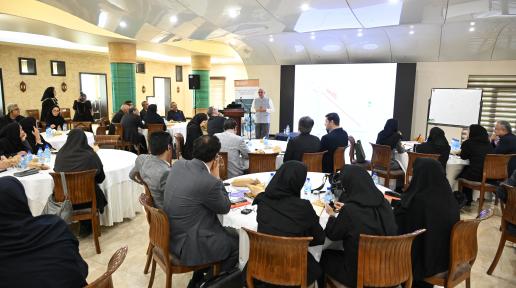
Following the launch of operations at the vermicompost hall by Mohammad, UNIDO aligned with its capacity-building program and, in its second round, conducted a waste-management training focused on vermicomposting. Consequently, a comprehensive home-scale vermicomposting training session took place on May 7, 2025, at the Semnan refugee settlement.
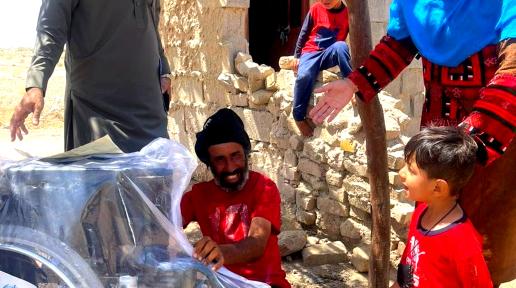
The training saw the enthusiastic participation of 133 refugees—127 women and 6 men—across various age groups. Many participants expressed strong interest in applying these practices, which play a vital role in reducing waste, enhancing food security, and promoting environmental stewardship within the community.To translate the May 7, 2025 training into action, a coordinated distribution took place on July 28, 2025. In this phase-one rollout, 60 women refugees received vermicompost packages produced by the settlement’s own community capacity, led by Mohammad and his wife, Raziyeh. The aim was to equip women with practical tools for sustainable gardening and waste reduction, reinforcing gender-inclusive approaches to environmental resilience within the Semnan settlement.
Beyond the distribution itself, the event also served as an opportunity to reinforce key concepts introduced during the training, including proper waste segregation, household-level composting techniques, and simple methods for integrating vermicompost into small-scale home gardens. Participants expressed appreciation for both the materials received and the continued technical guidance, noting that such support enhances their ability to improve soil fertility, grow nutritious produce, and reduce household waste.
Now Tayebeh, a 42-year-old refugee woman who participated in UNIDO’s training and received the vermicompost package, expressed clear satisfaction with the initiative, noting significant improvements in her plants’ growth and a marked reduction in waste destined for landfill since adopting vermicompost; she also asked the UNIDO team for additional and larger vermicompost packages to expand the program, saying, “I’ve seen a real change in how we handle waste— vermicompost has turned what used to go to landfill into something useful, and now we’re keeping our surroundings cleaner and healthier for our children.”
Building on this momentum, UNIDO plans a phased expansion: increasing vermicompost capacity within the settlement, forming a community cooperative to train more participants, and extending the program to settlements through scaled deployments and strengthened supply chains. Tayebeh and other successful participants welcomed the rollout and have offered to mentor new participants, helping ensure the initiative remains deeply rooted in local needs, dignity, and shared success. Project’s main objectives:Empower Afghan refugees/host population through the improved living environment, access to sustainable infrastructures, and livelihood opportunitiesCapacity building of refugees to participate in economic activities after returning to the home country through vocational trainingDonor: The Government of Republic of Korea (RoK)Project Budget: 998,067 USDTarget community and geographical Scope:The host community and Afghan refugees residing in two settlements, with a total population of approximately 8,000. Mohajerin settlement in Semnan, Semnan provinceTorbat-e Jam settlement in Torbat-e Jam, Razavi Khorasan province
A notable milestone occurred in February 2025 when Mohammad, a 33-year-old refugee from Semnan settlement, successfully reactivated the local vermicompost farm that UNIDO had established and delivered in June 2023 after a period of inactivity. Demonstrating remarkable dedication and skill, Mohammad produced an impressive 1,200 kilograms of high-quality vermicompost in just four months. The achievement reflects his persistent effort, commitment to environmental sustainability, and focus on community development. Restoring the farm after neglect underscored the value of empowering local community members through targeted training, ongoing mentorship, and active engagement. Mohammad’s success illustrates how young refugees can serve as catalysts for sustainable practices, inspire others, and contribute to eco-friendly solutions within the settlement.
This accomplishment reflects the potential of community-led initiatives supported by continuous capacity building and fosters a sense of ownership and pride among refugees. With ongoing support, Mohammad’s success creates a pathway for expanding vermicomposting activities, improving waste management, and promoting environmentally friendly livelihoods within the settlement.
Following the launch of operations at the vermicompost hall by Mohammad, UNIDO aligned with its capacity-building program and, in its second round, conducted a waste-management training focused on vermicomposting. Consequently, a comprehensive home-scale vermicomposting training session took place on May 7, 2025, at the Semnan refugee settlement.
The training saw the enthusiastic participation of 133 refugees—127 women and 6 men—across various age groups. Many participants expressed strong interest in applying these practices, which play a vital role in reducing waste, enhancing food security, and promoting environmental stewardship within the community.To translate the May 7, 2025 training into action, a coordinated distribution took place on July 28, 2025. In this phase-one rollout, 60 women refugees received vermicompost packages produced by the settlement’s own community capacity, led by Mohammad and his wife, Raziyeh. The aim was to equip women with practical tools for sustainable gardening and waste reduction, reinforcing gender-inclusive approaches to environmental resilience within the Semnan settlement.
Beyond the distribution itself, the event also served as an opportunity to reinforce key concepts introduced during the training, including proper waste segregation, household-level composting techniques, and simple methods for integrating vermicompost into small-scale home gardens. Participants expressed appreciation for both the materials received and the continued technical guidance, noting that such support enhances their ability to improve soil fertility, grow nutritious produce, and reduce household waste.
Now Tayebeh, a 42-year-old refugee woman who participated in UNIDO’s training and received the vermicompost package, expressed clear satisfaction with the initiative, noting significant improvements in her plants’ growth and a marked reduction in waste destined for landfill since adopting vermicompost; she also asked the UNIDO team for additional and larger vermicompost packages to expand the program, saying, “I’ve seen a real change in how we handle waste— vermicompost has turned what used to go to landfill into something useful, and now we’re keeping our surroundings cleaner and healthier for our children.”
Building on this momentum, UNIDO plans a phased expansion: increasing vermicompost capacity within the settlement, forming a community cooperative to train more participants, and extending the program to settlements through scaled deployments and strengthened supply chains. Tayebeh and other successful participants welcomed the rollout and have offered to mentor new participants, helping ensure the initiative remains deeply rooted in local needs, dignity, and shared success. Project’s main objectives:Empower Afghan refugees/host population through the improved living environment, access to sustainable infrastructures, and livelihood opportunitiesCapacity building of refugees to participate in economic activities after returning to the home country through vocational trainingDonor: The Government of Republic of Korea (RoK)Project Budget: 998,067 USDTarget community and geographical Scope:The host community and Afghan refugees residing in two settlements, with a total population of approximately 8,000. Mohajerin settlement in Semnan, Semnan provinceTorbat-e Jam settlement in Torbat-e Jam, Razavi Khorasan province