FAO and Department of Environment explore national coordination mechanisms for Green Climate Fund
Strengthening Iran’s Access to GCF with National Ownership, Knowledge-Based Policies, and Sound Technologies
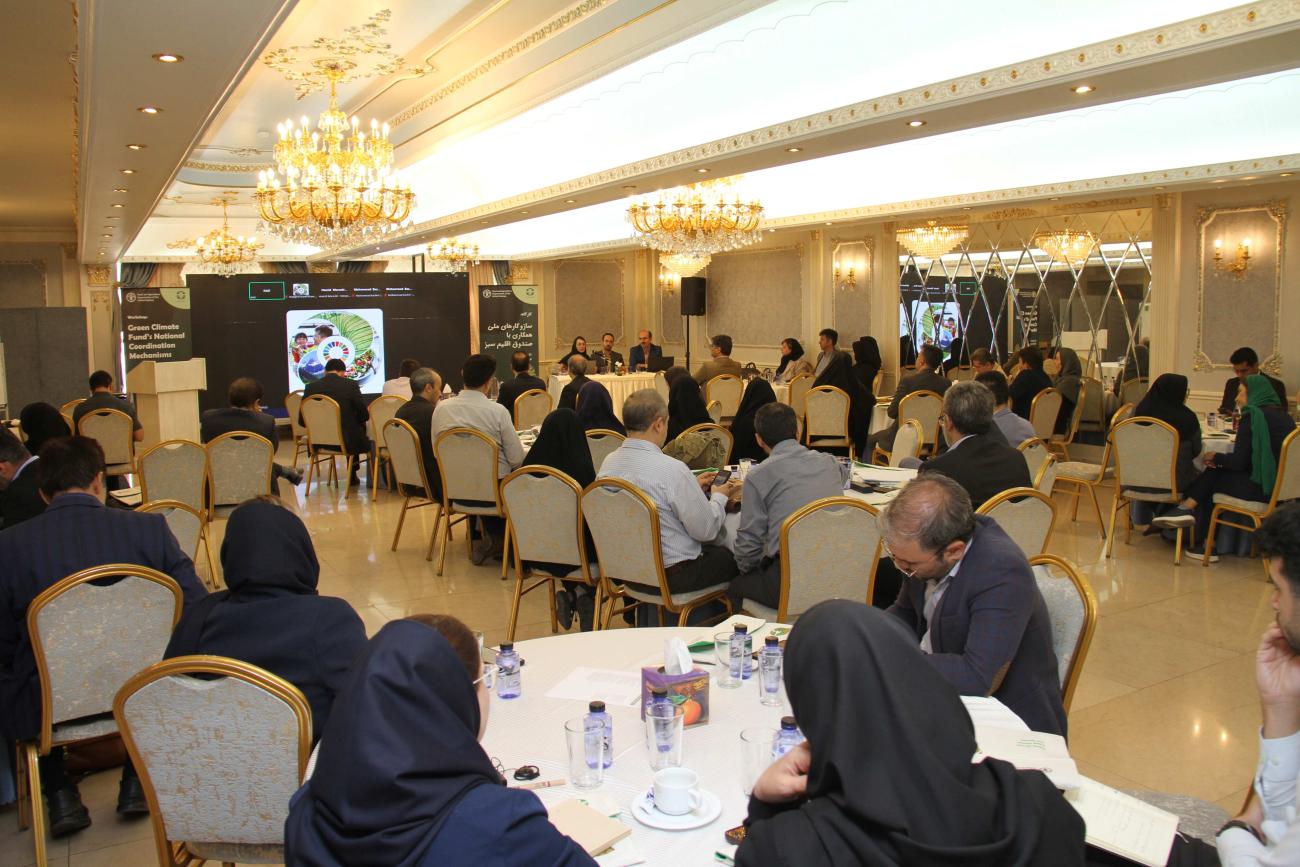
Organized under the GCF-funded project titled “Strengthening Iran’s Access to GCF with National Ownership, Knowledge-Based Policies, and Sound Technologies,” the workshop is part of broader efforts to strengthen Iran’s institutional readiness to effectively access and utilize climate finance.
As the delivery partner for the project, FAO, alongside the DoE, which serves as Iran’s National Designated Authority to the GCF, is launching a series of workshops aimed at developing effective national coordination mechanisms. These mechanisms are vital for facilitating stronger engagement with the GCF and other multilateral climate finance institutions.
In a message delivered on his behalf, Farrukh Toirov, FAO Representative to the Islamic Republic of Iran, emphasized the importance of readiness programmes in supporting partner countries. “Initiatives like this are relatively new frameworks launched by multilateral institutions to help countries enhance their climate financial planning and institutional capacity.”
“Key activities under the Readiness II project include identifying national adaptation and mitigation priorities, conducting Technology Needs Assessments, preparing Technology Action Plans, developing a National Low Carbon Management Plan, and formulating a Direct Access Strategy. The success of these components relies on the active involvement of Iran’s National Climate Change Working Group (NCCWG) and National Climate Change Finance Committee (NCCFC),” he further noted in his message.
Toirov’s message concluded by underscoring the significance of the event, adding “This workshop marks an important milestone in our joint efforts to support Iran’s climate resilience. We hope it becomes a platform for long-term, constructive collaboration—anchored in national ownership and guided by international best practices.”
The event drew the participation of key stakeholders, including representatives from government agencies, technical experts, and members of national coordination bodies, reflecting a shared commitment to advancing Iran’s climate agenda through inclusive and coordinated efforts.



Written by
Food and Agriculture Organization of the United Nations
UN entities involved in this initiative
Goals we are supporting through this initiative